Arrive at the Start Line Strong and Fresh
Strength training can make marathoners more durable across a full training cycle, but race week is about a different goal: arriving with fresh, responsive legs. This is especially top of mind for runners preparing for an October marathon, when months of long runs and workouts may already be sitting in the body.
Our direct answer is simple: do not begin a new lifting routine right before your taper. If you have trained for strength consistently, a reduced maintenance routine may fit. If lifting has not been part of your recent training, we recommend putting your energy toward recovery, race-specific running, sleep, nutrition, and hydration. The right call also depends on your race goal, recent fatigue, movement quality, and time available to recover.
Keep Strength Work Productive During the Taper
During a taper, strength work should support your running rather than compete with it. Runners who already lift regularly may keep a few familiar movements with lighter loads and fewer sets. We want to maintain confidence in movement patterns without creating soreness that changes the feel of your final runs.
A taper is not the time to chase a new strength gain. It is also not the time to see what your max lift might be. We generally encourage athletes to avoid:
- Unfamiliar exercises or new training formats
- High-volume lower-body sessions
- Intense plyometrics or jumping drills
- Max-lift testing
- A demanding leg workout close to race day
Runners considering strength training in Highland Park should consider whether their current routine has been consistent enough to maintain safely during taper. At Vision Quest Coaching, we help athletes separate productive maintenance work from training that could compromise recovery before race day. Our in-studio strength training approach can also help shape a more purposeful plan after the marathon.
Use a Strength Evaluation to Target Race Needs
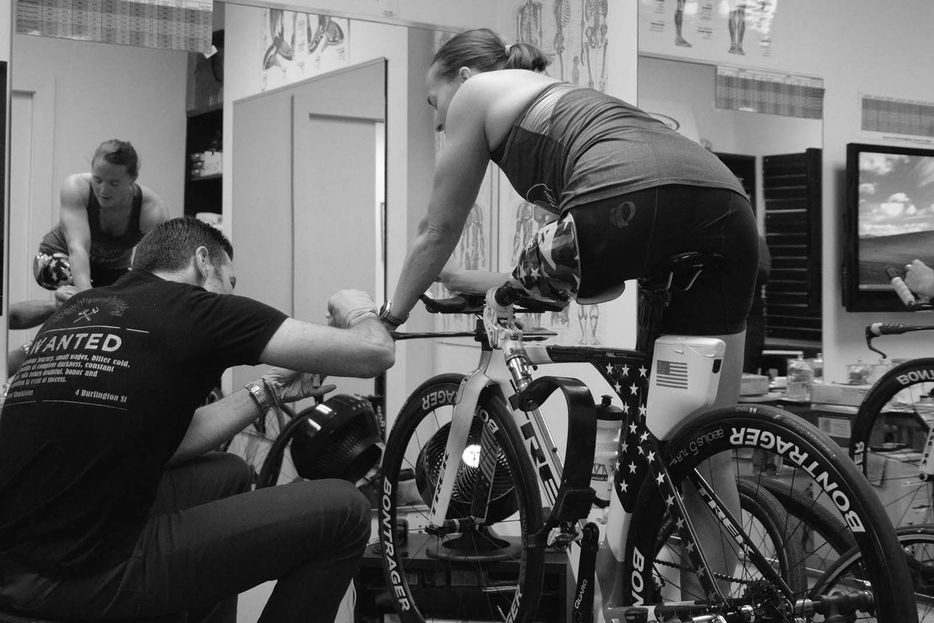
A strength evaluation gives us a clearer view of what may be influencing your running. Instead of guessing which exercises belong in your plan, we can look for movement asymmetries, stability limits, mobility restrictions, and strength gaps that may affect running economy or late-race form.
Those findings are often more useful after your goal race than during the final taper. Major changes close to the marathon can create unwanted fatigue. Once the race is behind you, we can use the evaluation to build a smarter next block, address weak points, and create more resilience before your mileage begins to rise again.
For athletes exploring strength training in Highland Park, a Vision Quest Coaching strength evaluation provides an individualized starting point. The assessment helps us prioritize areas that can support efficient training, recovery, and long-term performance, rather than adding random workouts to an already full schedule.
Fuel and Hydrate for a Confident Marathon
Less running during the taper does not mean less need to fuel well. We encourage runners to use this period to practice a race-week nutrition approach that supports glycogen stores, digestion, recovery, and confidence. Underfueling because training volume has dropped can leave you feeling flat when it is time to run.
RMR testing can provide useful baseline information about resting energy needs, while a nutrition consultation helps us turn training demands, race goals, and food preferences into a practical fueling plan. These conversations can make race week feel more organized and less reactive.
Hydration also deserves individual attention. Every marathon athlete should understand their sodium and sweat-rate needs before creating a race-day plan. A personalized strategy can guide how you prepare for long runs and the marathon itself, rather than copying what worked for another runner. Our performance testing services give us useful information to guide those choices.
Let Testing Shape Your Next Training Block
Race week is not the time to change body composition or force a new fitness marker. A DEXA scan can help you understand body-composition trends and establish a useful baseline for future training. We treat that information as one part of a broader performance picture, alongside your training history, goals, recovery, and available time.
Different tests answer different questions. A VO₂ max test measures one aspect of aerobic performance. A DEXA scan looks at body-composition data. Robbie’s metabolic cycling assessment is a separate service and should not be confused with either VO₂ max testing or a DEXA scan.
For triathlon and cycling coaching clients, we use relevant performance data to shape individualized plans and adjust them over time. That means the work can fit the athlete’s available time while staying focused on performance. Our triathlon and cycling coaching resources reflect the same focus on purposeful training rather than unnecessary stress.
Build a Smarter Plan with Vision Quest Coaching
Strength training has a meaningful place in marathon preparation, but the taper should protect freshness. Familiar, low-fatigue work may make sense for runners with a steady lifting background. Major changes, hard leg sessions, and new exercises are better saved for a future training block.
After race day, your results and performance data can guide more useful decisions. A strength evaluation, nutrition consultation, RMR test, DEXA scan, VO₂ max test, or sodium and sweat-rate test can help clarify what to carry forward. The strongest next block is one built around your actual needs, recovery capacity, and goals.
Build A More Effective Next Training Block
At Vision Quest Coaching, we help athletes turn race-day insights into practical progress. Our strength training in Highland Park can support better durability, power, and recovery for the goals ahead. Contact us to discuss the right next steps for your training.