How a Triathlon Coach in Highland Park Works Around Your Real Schedule
Most busy athletes on the North Shore do not have a motivation problem. They have a prioritization problem. When you are balancing a demanding job, family commitments, travel, and the real-life chaos of late summer, the question is not whether to train, it is which sessions actually matter when you cannot do all of them.
That is the core value a triathlon coach in Highland Park provides. Not more workouts. A clear answer to the question: given what I have this week, what should I do?
At Vision Quest Coaching in Highland Park, we build triathlon training plans around your race calendar, your fitness data, and your actual availability and not an idealized training week that assumes you have 15 free hours and fresh legs every morning. Here is how that works in practice.
Triathlon Coaching in Highland Park: What Adaptive Planning Actually Looks Like
A triathlon training plan that does not adapt to your life is not a plan. It is a template with your name on it.
The difference shows up quickly. You have a brutal work week and miss two sessions. A generic plan falls behind and you spend the next week trying to make up lost volume. An adaptive coaching plan accounts for the miss, adjusts the upcoming block, and keeps you moving forward without the stress of feeling perpetually behind.
At Vision Quest, plan adjustments are not exceptions — they are built into how coaching works. When a work trip limits pool access, your swim block shifts. When a hard week leaves you more fatigued than expected, intensity targets come down and you protect the sessions that matter most. When a fall race is three weeks out, everything in the training plan points toward arriving ready rather than arriving exhausted.
This kind of responsiveness is what separates coached triathlon training from downloading a 20-week plan and hoping life cooperates.
Triathlon Coaching Services at Vision Quest Highland Park
Vision Quest offers triathlon coaching in three formats, depending on how much structure and support fits your schedule and goals.
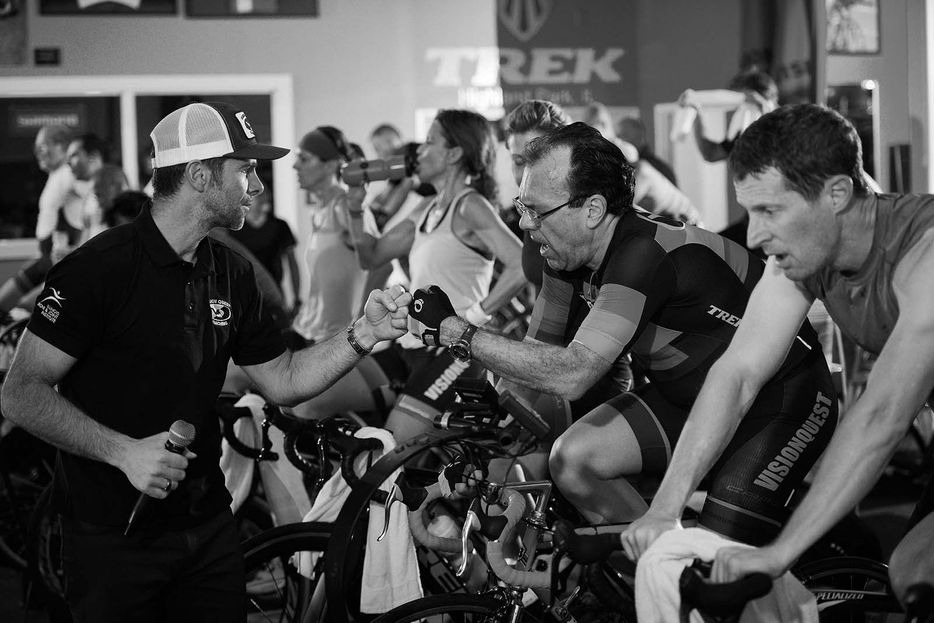
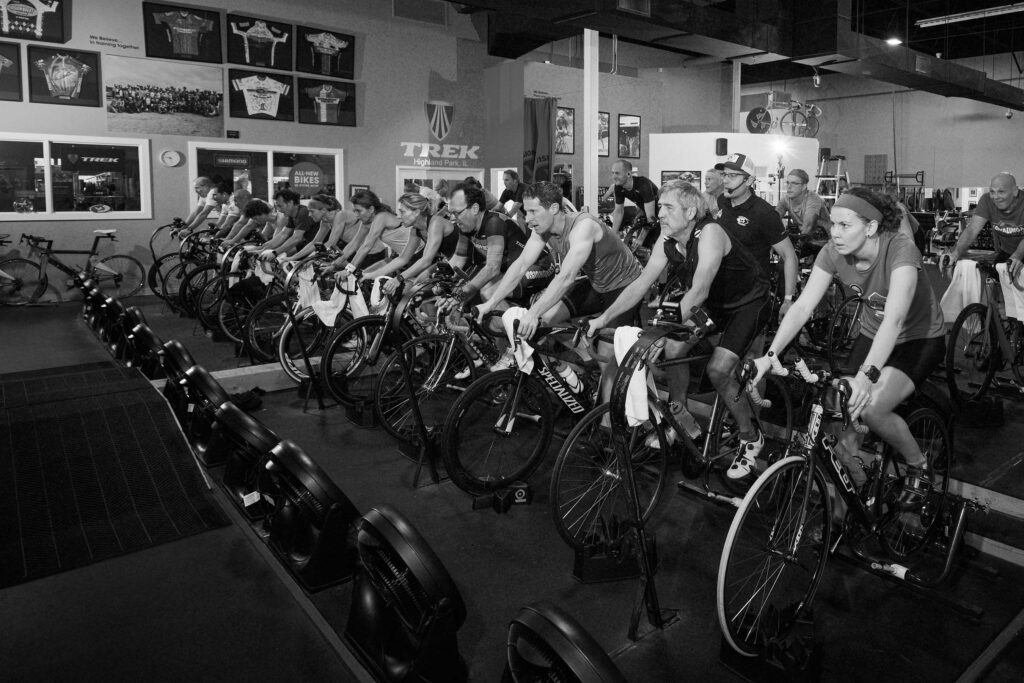
In-studio training at the Highland Park studio at 1923 Skokie Valley Rd gives you coached cycling classes, strength sessions, and access to the full performance testing suite in one location. For North Shore athletes who can get to the studio regularly, this is the most integrated option.
Virtual coaching works for athletes who travel frequently, have unpredictable schedules, or live outside the immediate Highland Park area. You get a fully personalized plan, power and heart rate zone targets based on real testing data, and ongoing coach feedback through a platform you can access anywhere. Many VQ athletes combine in-studio sessions with virtual training depending on the week — the plan does not pause when life gets complicated.
Hybrid coaching gives you the structure of a full coaching program with the flexibility to split sessions between the studio and wherever life takes you. This is the format most common among North Shore athletes who are serious about a fall triathlon or century goal but cannot commit to a fixed weekly studio schedule.
How Performance Testing Removes the Guesswork From Busy Training
When training time is limited, every session has to count. That is only possible when the plan is built from real data rather than age-based formulas and estimated zones.
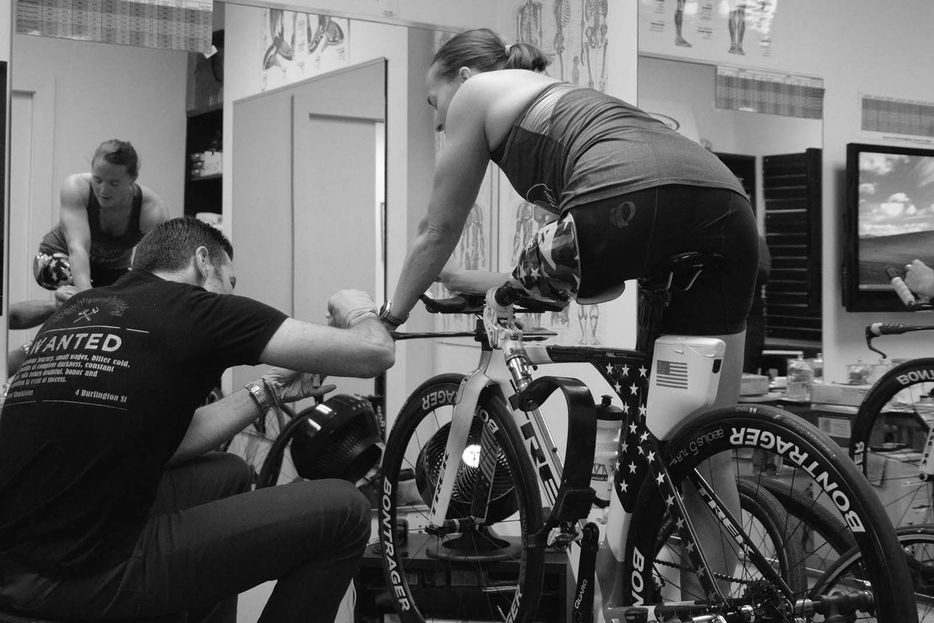
At Vision Quest, performance testing options are available to support the coaching. The assessments available at the Highland Park studio include VO2 max testing to establish your true aerobic capacity and set accurate training zones for swimming, cycling, and running, DEXA body composition scanning to give you a regional breakdown of lean mass, fat mass, and bone density that guides both training load and nutrition decisions, Resting Metabolic Rate testing to measure your actual daily caloric needs so fueling supports training rather than working against it, Kinotek movement screening to identify the compensation patterns and imbalances that create injury risk under high training volume, and sweat and sodium testing to build a personalized hydration plan for summer racing and long training days.
For a busy athlete, this data matters more than it does for someone with unlimited training time. When you have 8 hours a week instead of 15, knowing exactly which system is your limiter tells your coach where to direct those 8 hours. Without that data, you are guessing — and guessing with limited time produces limited results.
Fitting Swim, Bike, Run, and Strength Into a Real Week
The biggest practical challenge in triathlon training is not fitness — it is sequencing. Swim, bike, run, strength, and recovery all compete for the same limited days. Get the order wrong and you arrive at your key sessions pre-fatigued. Stack too much in one week and you dig a hole that takes two weeks to climb out of.
For time-crunched athletes in Highland Park, a realistic triathlon training week usually looks like this. High-priority sessions — the one long ride, the one quality run, and the one swim with technique focus — are protected first. Secondary sessions fill remaining days at lower intensity. Strength work is paired with hard cycling days so that recovery days stay genuinely easy. When a week is unusually demanding, one or two secondary sessions get dropped before any priority session gets touched.
This kind of hierarchy is what a coach builds and maintains. On your own, it is tempting to try to do everything and end up doing nothing well. A coach makes the hard call about what to cut before you have to make it at 5:30 in the morning when you are already tired.
Late Summer Training for Fall Races: What to Focus On Now
For North Shore athletes with a fall event on the calendar, late summer is the window where training specificity matters most.
Volume should be at or near its peak in these weeks, but not at the expense of quality. The athletes who arrive at fall races well-prepared are not the ones who accumulated the most miles but they are the ones who protected their key sessions, fueled consistently, and managed fatigue intelligently through the final build.
A triathlon coach in Highland Park helps you navigate that balance. The difference between arriving at your race feeling sharp and arriving feeling ground down is almost always a planning and recovery decision, not a fitness one. With eight to ten weeks remaining before a fall event, there is still time to make meaningful improvements, but that window closes quickly, and the decisions made in these final weeks have an outsized effect on race day.
Protect Limited Training Time with Strength
Further, a strength evaluation in Highland Park can identify movement, stability, and strength priorities that may affect your triathlon or cycling performance. The goal is not to pile random gym sessions onto an already full week. We use evaluation findings to identify the areas most worth addressing with an efficient strength plan.
Through in-studio cycling and strength support, endurance work, strength training, recovery, and race preparation can fit together instead of competing for your attention. As fitness, schedule availability, and goals change, we continue adjusting the plan so your training stays realistic and performance-focused.
Late summer is a useful time to look at whether your routine is producing measurable progress. Small changes in training structure, strength work, nutrition, or testing can create clearer priorities for the remaining weeks before a fall event.
Get Clear Data for Your Next Training Block
At Vision Quest Coaching, we use performance testing to help you understand what is driving your current fitness and where focused adjustments can make the biggest difference. Work with a triathlon coach in Highland Park to turn your results into practical training targets for your next race. If you have questions about testing or coaching options, contact us to start the conversation.