Most cyclists in Highland Park know their FTP. It is the number that drives their training zones, gets posted after hard workouts, and serves as the primary measure of whether fitness is improving. FTP is useful. But it is also incomplete and for serious cyclists, that incompleteness has real consequences.
FTP tells you where your threshold is. It does not tell you why it is there, what is limiting it, or what type of training will actually move it. Two cyclists with identical FTP numbers can have completely different metabolic profiles, respond differently to the same training, and need entirely different approaches to improve. FTP cannot show you any of that.
INSCYD metabolic testing can.
Vision Quest Coaching is an exclusive Midwest INSCYD partner — one of a small number of coaching organizations in the region certified to deliver this testing system. The same system is used by professional cycling teams and elite endurance coaches worldwide. Here is what it reveals and why post-season is the right time to do it.
What INSCYD Metabolic Testing Actually Measures
INSCYD produces what the system calls a metabolic fingerprint, a complete physiological profile built from structured efforts on the bike. The athlete completes a series of specific intervals using a power meter. That data is analyzed through INSCYD’s software to calculate metrics that no standard FTP test or VO2 max test can produce on their own.
The metrics INSCYD delivers include your VO2 max, your VLamax, your anaerobic threshold, your fat and carbohydrate combustion rates at every intensity, and your lactate accumulation and clearance rates above and below threshold.
Most of those terms are familiar to serious cyclists. But the way INSCYD combines them, and what the combination reveals, is what makes this test genuinely different from anything else available.
VLamax: The Number Most Cyclists Have Never Heard Of
VO2 max measures your aerobic ceiling, how much oxygen your body can use at maximum effort. Most cyclists know this one. VLamax is the metric almost no cyclist has ever seen, and it is often the more actionable number.
VLamax measures your maximum glycolytic power, how quickly your body produces lactate. That rate of lactate production determines how much of your aerobic capacity gets used to clear lactate rather than power your pedal stroke. A high VLamax makes you explosive and strong at short efforts, but it works against you at sustained threshold pace and long race efforts because your body is burning through carbohydrate faster than it can be replaced.
Here is why this matters for training decisions. Two cyclists can have the same VO2 max and the same FTP but completely different VLamax values. The cyclist with high VLamax will respond well to short, explosive interval work but plateau quickly on long sustained efforts. The cyclist with low VLamax will thrive in long-course racing but struggle to respond to attacks or accelerations. Generic training plans cannot account for that difference. INSCYD makes it visible and actionable.
Fat and Carbohydrate Combustion at Every Intensity
INSCYD calculates exactly how much fat and carbohydrate you burn at any given power output. Two specific numbers come from this — FatMax and CarbMax.
FatMax is the power output at which you burn the maximum amount of fat. Training at and around FatMax builds the aerobic base that supports long-course racing, sustained climbing, and late-race durability. Most cyclists either do not know their FatMax or train above it constantly, which limits fat adaptation and increases dependence on carbohydrate.
CarbMax is the point at which you burn more carbohydrate than your gut can absorb during a race. Once you cross that line in competition, you are running a deficit that will catch up with you. Knowing exactly where CarbMax sits for your specific physiology allows your coach to build a race-day fueling plan around your actual numbers rather than general guidelines.
For cyclists preparing for long events — century rides, gran fondos, or Ironman bike legs — these two numbers are among the most valuable data points available.
Why Post-Season Is the Right Time for INSCYD Testing
The offseason has lower training load, which means your body is not carrying accumulated fatigue from weeks of hard riding. Test results reflect your true baseline rather than a tired version of it. That produces cleaner, more accurate data.
More importantly, there is time to act on what the results show. An INSCYD test completed in November gives your coach a full winter to build a training block specifically targeting the limiters the test identified. A cyclist whose INSCYD reveals high VLamax and limited fat combustion gets a different winter plan than one whose test shows strong fat oxidation but a low aerobic ceiling. Both athletes may have the same FTP going in. They need completely different training to improve it.
For North Shore cyclists who rode the North Shore Century, competed in Supertri Chicago, or raced through a full summer calendar, the post-season INSCYD test is the most direct way to convert a season’s worth of riding into a smarter plan for next year.
How INSCYD Testing Works at Vision Quest
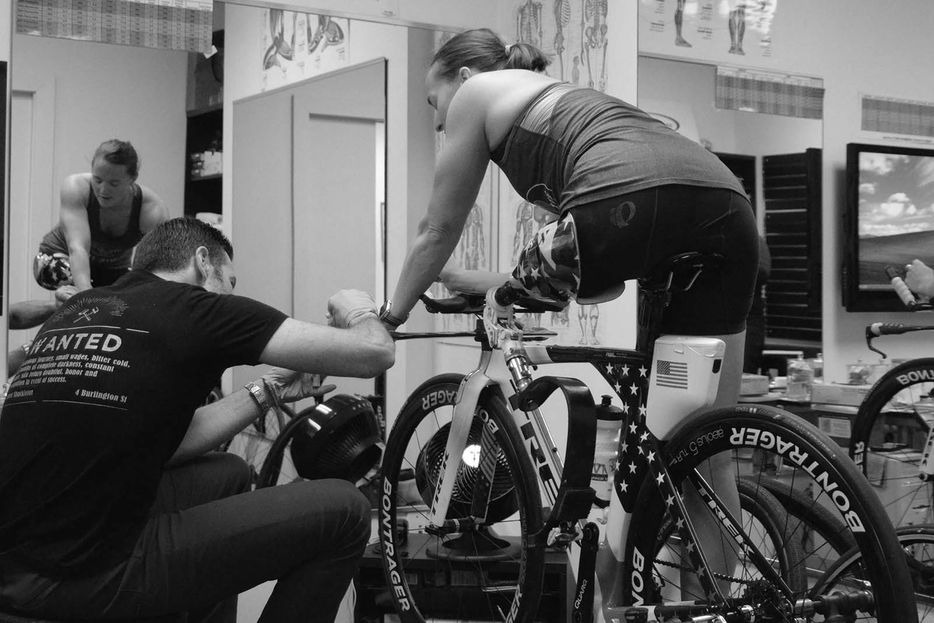
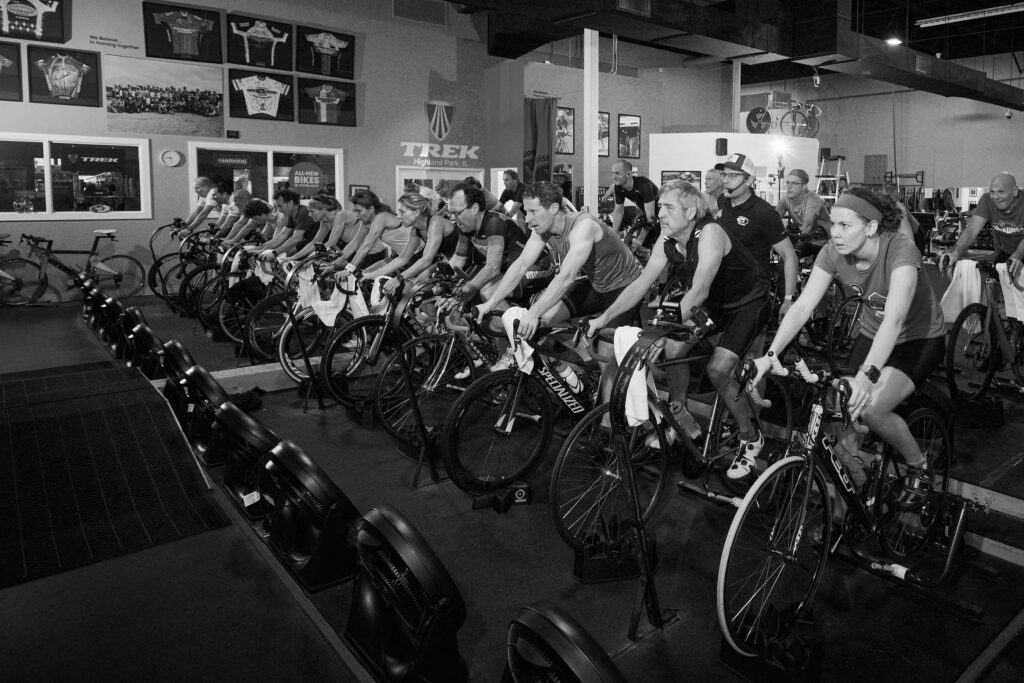
The test is available in two formats. In-studio testing is conducted at the Highland Park studio at 1923 Skokie Valley Rd. Remote testing is available anywhere through the INSCYD Power Performance Decoder — all you need is a power meter or GPS watch. Your coach sends you the structured test protocol, you complete the efforts on your own bike at home or on your trainer, and the data is uploaded and analyzed through the INSCYD platform.
Either way, results are reviewed directly with your coach. You receive a complete metabolic profile, a breakdown of what each metric means for your specific training, and a clear set of priorities for the upcoming season. You do not receive a report and get left to interpret it alone.
Vision Quest retests every 12 to 16 weeks. When you retest after a targeted training block, the INSCYD data shows exactly whether the work moved the numbers it was designed to move.
Who This Is Not For
If you are a recreational cyclist whose primary goal is fitness and enjoyment rather than performance improvement, INSCYD is probably more detail than you need. A VO2 max test and a solid training plan will serve you well.
INSCYD is for cyclists who have been training consistently, have a real performance goal, and want to know specifically what is limiting them and how to fix it. It is for athletes who are tired of following plans that were not built for their physiology and want to see the data behind their own engine.
Frequently Asked Questions About INSCYD Metabolic Testing in Highland Park
What is the difference between INSCYD testing and a standard VO2 max test? A VO2 max test gives you your aerobic ceiling — one important number. INSCYD produces a complete metabolic profile that includes VO2 max alongside VLamax, fat and carbohydrate combustion rates at every intensity, anaerobic threshold, and lactate dynamics. Together those metrics tell your coach not just how big your engine is but how it actually runs and what is limiting it.
Do I need to come to the Highland Park studio for INSCYD testing? No. INSCYD testing is available remotely through the Power Performance Decoder protocol. You complete the structured test efforts on your own bike with a power meter, upload the data, and your coach delivers a full analysis. In-studio testing is also available at 1923 Skokie Valley Rd, Highland Park, IL 60035 for athletes who prefer to test in person.
Is Vision Quest the only place in the Midwest to get INSCYD testing? Vision Quest is an exclusive Midwest INSCYD partner. That means our coaches are certified to administer, analyze, and coach from INSCYD data — the same system used by professional cycling teams and elite endurance programs worldwide.
How is INSCYD different from FTP testing? FTP identifies your threshold power. INSCYD explains what is driving it and what is limiting it. Two cyclists with identical FTP numbers can have completely different training needs when their INSCYD profiles are compared. FTP is one output from INSCYD — but it is the least interesting number on the report.
How long does the INSCYD test take and what does it involve? The test involves a structured series of intervals on the bike — sprints and longer maximal efforts at specific durations. Total testing time is typically 60 to 90 minutes including warm-up. Results are reviewed with your coach in a follow-up session.
If you are a cyclist in Highland Park, Glencoe, Lake Forest, or anywhere on the North Shore and you want to know what is actually limiting your performance — not what you suspect, but what the data shows — schedule your INSCYD metabolic test at Vision Quest Coaching. In-studio at 1923 Skokie Valley Rd, Highland Park, IL 60035, or remotely with a power meter from anywhere. Contact us to get started.