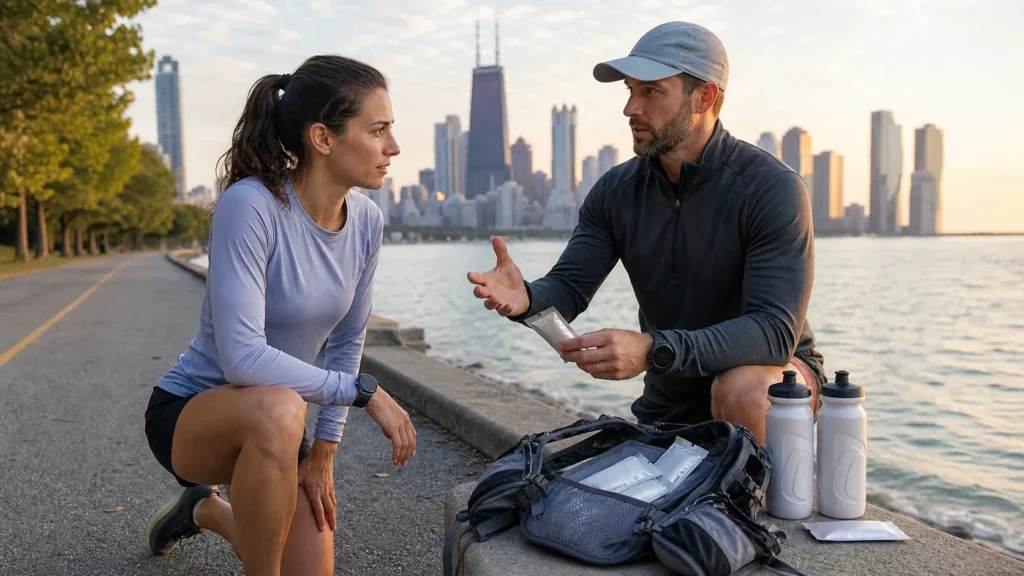
Make Every Chicago Long Run a Better Hydration Rehearsal
Late August heat and humidity can make Chicago long runs feel very different from the cooler race mornings that may follow. When a run starts warm and finishes even warmer, generic advice about “drinking more water” is not enough. We help athletes build personalized hydration plans that protect training quality, support recovery, and create a routine they can repeat with confidence.
Your needs can change based on body size, pace, workout length, weather, sweat rate, and sodium losses. Sodium and sweat-rate testing give us a starting point based on your real data, helping connect fluid intake, electrolytes, fueling, and race-day planning for endurance training in Chicago.
Personalize Endurance Training in Chicago with Sweat Data
Sweat-rate testing estimates how much fluid you lose per hour during a workout. To understand the result, we may review your pre-run and post-run body weight, fluids consumed, workout duration, weather conditions, and any bathroom breaks during the session.
Two runners can train at a similar pace on the same lakefront route and still lose very different amounts of fluid. That is why we do not rely on a one-size-fits-all bottle schedule. Your hydration approach should reflect your own fluid loss, rather than what another athlete carries or drinks.
Conditions also matter. A result from a humid August long run may not match what happens during a cooler September workout or an October marathon morning. Testing in realistic training conditions gives us better information to work with, and we can revisit the strategy as the season shifts.
Sweat-rate data can help guide practical choices such as:
- Whether a handheld bottle, hydration pack, or aid-station plan fits your run
- When to plan drinking intervals during longer sessions
- How much fluid to carry versus pick up along the route
- When a changing forecast may call for an updated approach
The goal is not to drink as much as possible. Instead, we use the information to help you replace an appropriate amount of fluid while avoiding problems linked with both underdrinking and excessive fluid intake.
Match Sodium Intake to Your Sweat Profile
Fluid and sodium work together during long runs, rides, and race efforts that last for hours. Sodium testing helps us understand whether your sweat has relatively low, moderate, or high sodium concentration. From there, we can shape an electrolyte strategy around your expected fluid intake, event duration, heat exposure, and preferred fueling products.
Salt marks on clothing, cramping, or a strong preference for salty foods do not tell us exactly how much sodium you need. Those clues can be interesting, but they are not a personal sodium target. As marathon mileage and long-workout duration rise, testing provides a clearer direction than guessing.
Your results can inform choices around:
- Sports drinks and the amount you plan to drink
- Electrolyte capsules or chews
- Salty foods that work well with your fueling routine
- Sodium timing during long training sessions and race efforts
We encourage athletes to rehearse sodium intake during training rather than trying something new on race day. Late-summer long runs are especially useful for practicing, then cooler fall conditions give us another chance to see what needs to change.
Connect Hydration Data to Fueling and Performance
Hydration is only one part of endurance performance. Sweat-rate and sodium results can guide fluid and electrolyte decisions, while a nutrition consultation can connect those choices with carbohydrate intake, pre-workout meals, recovery nutrition, and gastrointestinal comfort.
RMR testing is separate from hydration testing. It can offer useful insight into baseline energy needs, especially when you are increasing marathon mileage, cycling volume, or triathlon training. Together, those data points can help us consider how daily energy intake supports the work you are asking your body to do.
Other assessments answer different questions. A DEXA scan measures body composition, while VO₂ max testing measures aerobic capacity. VO₂ max testing at DEXA is separate from the metabolic cycling assessment Robbie conducts with us. That cycling-specific assessment is a different evaluation and should not be confused with VO₂ max testing.
Rather than treating one number as the whole story, we use these separate insights alongside your training feedback and nutrition goals. Athletes working through virtual training and coaching can also keep plans connected to real schedules, travel, and changing workouts.
Adjust Your Plan as Chicago Conditions Shift
A hydration plan should change when your fitness, training environment, intensity, or goals change. What works during a humid August long run may need an adjustment for a cooler fall race morning, a higher-mileage block, or a faster goal pace.
Our individualized triathlon and cycling coaching is built around your available time and performance goals. As training response and race preparation develop, we continually adjust the plan so hydration and fueling decisions fit the work you are actually doing. That includes athletes using in-studio cycling and strength training as part of a broader endurance routine.
Strength matters here, too. Our strength evaluations in Highland Park can identify movement capacity and areas to improve for more durable endurance training. Hydration is not an isolated concern, and neither is strength. Both belong in a plan that considers workload, recovery, nutrition, and race demands.
Build Your Race Plan Before Marathon Season Peaks
Before marathon season reaches its busiest stretch, athletes benefit from having enough long workouts left to practice their hydration plan more than once. Changes in body weight, fitness, sweat rate, weather, training intensity, or product tolerance can all be reasons to reassess the details.
For endurance training in Chicago, the strongest race-day routine is one you have tested in real conditions and refined through ongoing feedback. Whether you are preparing for a marathon, fall cycling event, or triathlon goal, personal data helps turn hydration from a last-minute guess into a practiced part of your performance plan.
Build A Smarter Hydration Strategy
At Vision Quest Coaching, we help athletes apply individualized insights to every stage of preparation. Explore endurance training in Chicago to work with coaches who can help you align fueling, pacing, and recovery with your goals. When you are ready to discuss your next event, contact us to get started.