Why This Search Is Harder Than It Looks in Chicago
Chicago has no shortage of trainers, studios, coaches, and online programs. Between the big-box gyms in Lincoln Park, the boutique cycling studios in Bucktown and River North, the park district fitness options, and every certified trainer with an Instagram page, the options are genuinely overwhelming.
The problem is that most of them look similar from the outside. Everyone has good reviews, decent photos, and a confident pitch about results. The difference between a coach who changes your fitness and one who just fills your calendar shows up much later — usually after a few months of hard work with nothing clear to show for it.
This guide is for anyone in Chicago who is serious about getting this decision right the first time. We will cover what credentials actually matter, how to match coaching style to your personality, and why the coaches who test before they train consistently produce better long-term results.
Credentials That Actually Matter for Chicago Athletes
Certifications matter, but not all of them mean the same thing for every goal. The most respected credentials in the industry come from organizations like NASM (National Academy of Sports Medicine), ACE (American Council on Exercise), the NSCA for strength and conditioning (look for the CSCS designation), and USA Cycling or USA Triathlon for endurance sports coaching.
What separates a meaningful credential from a random online certificate is whether it required real study of exercise science, program design, and injury risk — and whether it requires ongoing education to maintain. A coach who earned a certification five years ago and has not updated their knowledge since is working from an outdated map.
But here is what most credential lists miss: for cyclists and triathletes training in Chicago, the certification is just the floor. The ceiling is real-world experience with athletes in your specific situation.
A coach who has worked with dozens of North Side riders preparing for the North Shore Century, the Chicago Triathlon, or a summer 70.3 knows things that no certification teaches — how Chicago winters affect base-building, when to push and when to hold back in high-humidity July heat, how to structure a training week around a 45-minute Metra commute each way.
Red flags worth noting:
- No current certification from a recognized organization
- Only generic online certificates with no real exercise science behind them
- Dismissing medical clearance if you have health concerns or a history of injury
- No movement screen, fitness assessment, or health history review before your first training plan
A coach who respects your health asks questions, gathers real data, and builds from where you actually are today.
Matching Coaching Style to How You Actually Train
Credentials get you in the door. Chemistry keeps you coming back.
Two coaches can hold identical certifications and one will click with you immediately while the other feels off by week two. That is not a small thing. Consistency is the most important variable in long-term fitness progress, and you will not be consistent with a coach whose style works against your personality.
Most coaching styles fall into a few recognizable patterns. There is the high-energy, directive approach — lots of pushing, loud cues, “go harder” is the default setting. There is the collaborative approach — more conversation, shared decisions, your feedback shapes the session. And there is the educational approach — the coach explains the reasoning behind every training block, uses your data to teach you how your body works, and treats you as a partner in the process.
Think about past teachers, coaches, or managers who actually helped you improve. What did they have in common? That is your baseline for what you need from a coach.
Practical questions to ask before you commit:
- How do you build a plan for someone with my goals and schedule?
- What happens to my training when work gets brutal or I have to travel for two weeks?
- How do you like to communicate, and how often should I expect to hear from you?
During any trial session or intro call, pay attention to whether the coach listens more than they talk, respects your injury history and current limits, and explains things in a way that makes sense without making you feel like a patient.
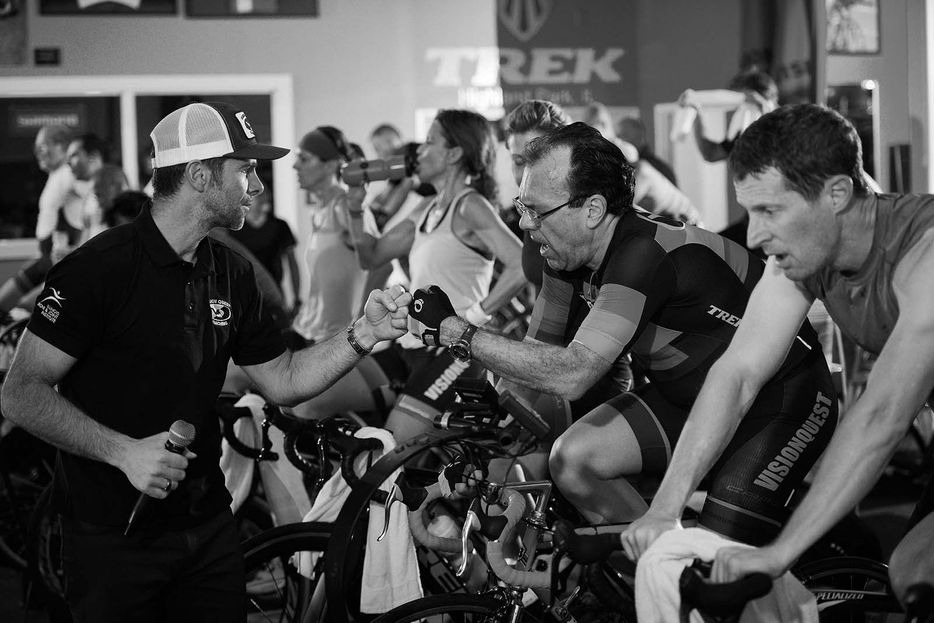
At Vision Quest Coaching, the approach is primarily educational. Coaches explain the reasoning behind every training block, use your testing data to show you exactly why your zones are set where they are, and treat you as someone capable of understanding your own physiology — because you are. That style works particularly well for cyclists, triathletes, and motivated adults who want to understand their training, not just follow it.
Cycling Coaching and Triathlon Coaching: Why Specialists Produce Different Results
If you are training for a cycling event, a triathlon, or any endurance-focused goal, a general personal trainer is a different kind of tool than an endurance coach. Both can be valuable. They are not interchangeable.
A cycling coach structures your year into phases — base, build, peak, taper — and sets your training zones from real power and physiological data, not age-based formulas. They know how to layer long endurance rides with threshold work and recovery in a way that produces measurable gains across a full season, not just a good week.
A triathlon coach sees all three disciplines as one interconnected system. Most self-coached triathletes overtrain their strongest leg and underinvest in their weakest one, usually without realizing it. A coach who has worked with athletes from their first sprint triathlon in Evanston to full Ironman finishes in Kona sees those patterns immediately and builds plans that correct them.
Chicago has endurance coaching options. What separates the better ones is whether coaching is grounded in real testing data from day one, whether coaches have worked with athletes across the full spectrum of experience levels, and whether the program supports both in-person and virtual athletes consistently.
Strength Training for Endurance Athletes in Chicago
One question worth asking any coach you are considering in Chicago: what does your strength training philosophy look like for endurance athletes?
The answer will tell you a lot. A coach who says “I have my cyclists do a general lifting program” is treating strength as an add-on. A coach who can describe periodized strength work designed to complement your cycling or run volume — adjusted by training phase, grounded in movement screening data, and targeted at the specific demands of your events — is thinking about your whole body as one system.
For cyclists and triathletes training through Chicago winters, the off-season strength block is often where the biggest performance gains happen. What you build in the gym from November through February shows up in your power output and durability the following summer. A coach who treats that window as optional is leaving real fitness on the table.
Why a Fitness Coach Who Tests Before They Train Wins Every Time
The single most important question you can ask any fitness coach in Chicago is: how do you set my training zones?
If the answer involves a formula using your age, a wearable estimate, or how you “felt” during a few warmup sessions — that is estimation. Estimation produces mediocre results because it puts you in the wrong intensity most of the time, usually too hard on easy days and not hard enough when it actually matters.
Coaches who test before they train start with direct measurements:
- VO2 max testing — how your body uses oxygen at higher efforts, and how much aerobic capacity you have to work with
- Lactate threshold testing — the specific intensity where your body starts accumulating fatigue faster than it can clear it
- FTP testing for cyclists — functional threshold power, which sets every power-based training level
- DEXA body composition scanning — exact muscle mass, body fat, and bone density, not an estimate from a scale
- RMR testing — your real resting metabolic rate, so nutrition guidance is built on your actual numbers
These numbers give a clear, objective starting point. From there, every session has a specific purpose. Easy days are actually easy. Hard days hit the right target. And when life in Chicago gets complicated — a packed work week, a family stretch, two weeks of travel — a coach with real baseline data can adjust your plan intelligently instead of just cutting sessions and hoping.
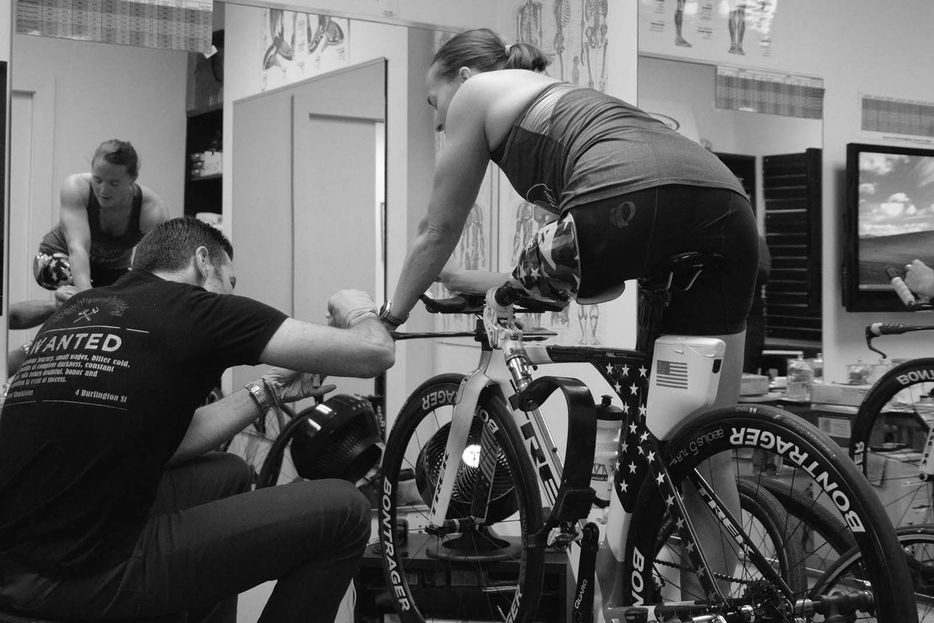
At Vision Quest Coaching, performance testing is the foundation of every coaching relationship. Our Highland Park studio offers the full testing suite including VO2 max, DEXA, RMR, Kinotek movement screening, sweat testing, and INSCYD metabolic profiling. Chicago studio members can access sweat testing on-site and combine that with Highland Park testing sessions for a complete picture.
Tracking Progress Through All Four Chicago Seasons
The lakefront path looks very different in July than it does in February. Smart training in Chicago accounts for both.
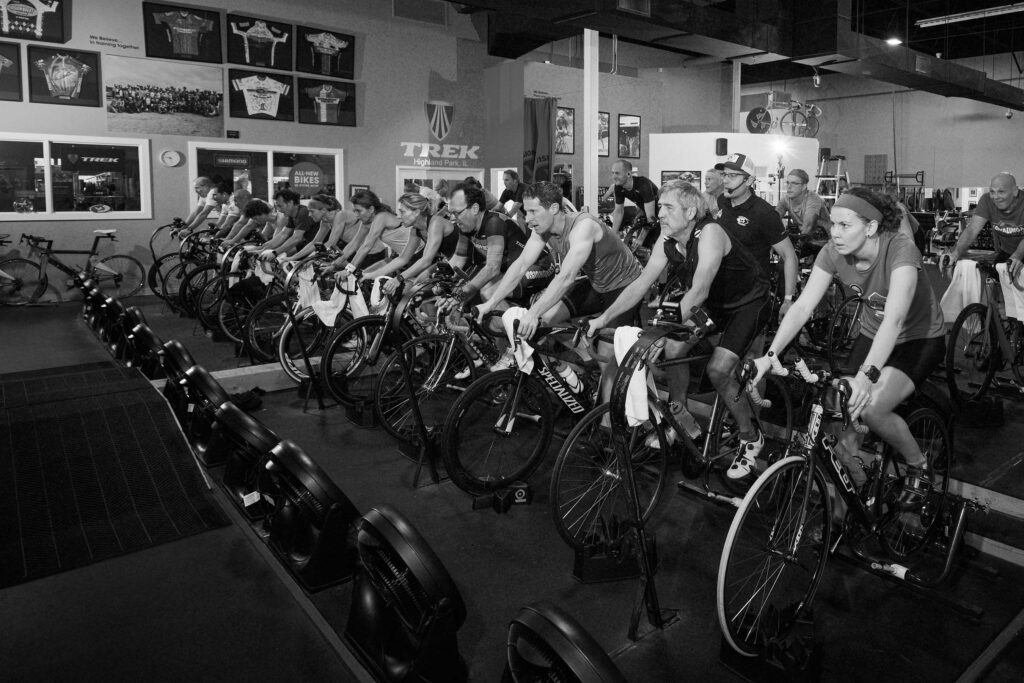
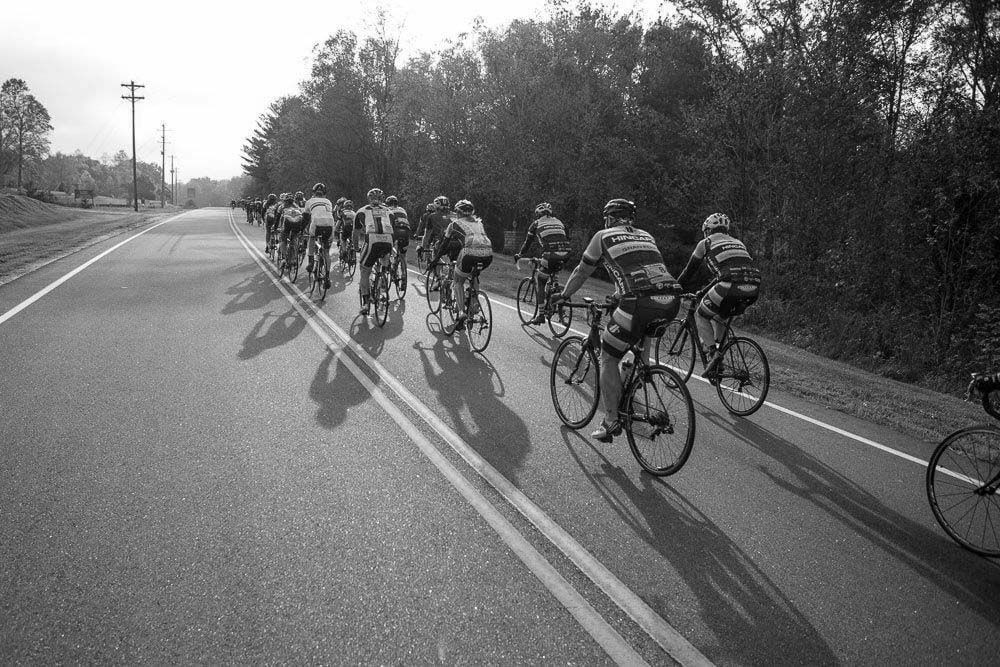
A year-round coaching relationship in Chicago typically looks something like this. Warm months are for events, long rides, outdoor runs, races, and building on the fitness you developed earlier. From the lakefront path in Lincoln Park to the North Shore trails, summer in Chicago is when training becomes visible and social. Colder months shift focus to strength, durability, base aerobic work, and the indoor studio — which, for cyclists, is when the real technical and physiological work gets done.
The tools that make this work across all four seasons include wearables that track heart rate, sleep, and daily activity, training platforms that show power, pace, and trend data over time, studio-based performance testing to retest key metrics at the start and end of each season, and regular coach check-ins that review how you feel alongside what the numbers say.
When life interrupts — and in Chicago, it always does — a coach who tracks your data over time can rebuild your plan quickly. A detour stays a detour instead of becoming a full stop.
How to Evaluate Vision Quest Coaching Against the Criteria Above
By this point in the guide, you have a set of criteria. Here is how Vision Quest Coaching stacks up against each one.
Credentials: Vision Quest coaches hold USA Cycling and USA Triathlon certifications alongside 25 years of professional endurance coaching experience. Founder Robbie Ventura raced professionally in Europe and brought that level of methodology into every coaching program built here.
Testing before training: Yes. The full testing suite — VO2 max, DEXA, RMR, Kinotek movement screen, sweat testing, INSCYD metabolic profiling — is available at our Highland Park studio. Chicago studio members have access to sweat testing on-site and can combine sessions across both locations.
Coaching style: Educational and grounded in your data. Coaches explain the reasoning behind every training block, show you your numbers in plain language, and adjust your plan when your data or your life changes.
Endurance specialization: Built for cyclists, triathletes, and runners. Over 8,000 athletes tested and more than 3,000 coached. Programs designed for everything from a first sprint triathlon to professional-level racing preparation.
Strength training integration: Included. Periodized strength work designed specifically for endurance athletes, phased to complement your cycling or run training block, adjusted based on movement screening data.
Year-round structure: In-person at Chicago (1750 N Kingsbury St) and Highland Park (1923 Skokie Valley Rd), plus a full virtual coaching platform for athletes who travel or prefer to train remotely.
If you are a general fitness beginner who wants casual group classes and low commitment, there are good options in Chicago for that and Vision Quest is probably not the right starting point. If you want your training built on real physiological data, coached by people who have done this for 25 years, with a community of athletes around you pushing toward similar goals — this is what we are built to do.
Ready to Find the Right Fitness Coach in Chicago?
The best fitness coach in Chicago for you is not necessarily the closest one, the cheapest one, or the one with the most followers. It is the one who tests before they train, coaches across the full season, adapts when your life changes, and has the real-world experience to know the difference between a training problem and a life problem.
If Vision Quest Coaching sounds like it fits those criteria for your goals, the next step is simple. Visit our Chicago studio at 1750 N Kingsbury St, try a free first class, or book a performance testing session to start with a real baseline. If you have questions about which option makes sense for where you are right now, contact us and we will give you a straight answer.