Fitness Coach Highland Park: Why Data-Driven Consultations Get Better Results
Most fitness consultations in Highland Park follow the same script: someone asks what your goals are, nods along, and hands you a program. Vision Quest does it differently. Before we prescribe a single training session, we test you. We measure VO2 Max, body composition, movement mechanics, and in some cases your sweat sodium levels. Then we build a program around what your body actually needs, not what we assume it needs.
That approach is not a marketing pitch. It is the methodology that has helped 3,000+ athletes improve their performance over 25 years, including cyclists riding their first century and triathletes competing at the Ironman World Championship.
If you are in Highland Park and looking for a coach who will give you honest answers and measurable results, here is exactly what a consultation at Vision Quest looks like and why it works.
Why Generic Fitness Advice Stops Working
There is a reason so many people plateau. They are training on assumptions.
A plan copied from a running app does not know your aerobic threshold. A cycling class built around generic resistance cues has no idea what watts you are actually capable of sustaining. A diet designed for someone your height and weight ignores the fact that your resting metabolic rate may be significantly higher or lower than the average.
The problem is not effort. Most of the athletes who come to Vision Quest are not training casually. The problem is that they are training without the right information.
When you do not know your numbers, you either work too hard and accumulate fatigue without the recovery to absorb it, or you work too easy and wonder why nothing is changing. Both outcomes waste time. Both outcomes are entirely avoidable.
What a Fitness Consultation at Vision Quest Actually Looks Like
Our consultations in Highland Park start with a conversation, but they do not stop there. We use that conversation to understand where you are and where you want to go. Then we build the testing plan that gives us the data to actually get you there.
Depending on your goals, that testing typically includes:
VO2 Max Testing measures your aerobic capacity, which is your body’s ability to take in and use oxygen during exercise. It is one of the single most predictive markers of long-term cardiovascular health and athletic performance. Our athletes improve VO2 Max by an average of 14% in 7 months. But more practically, it tells us your exact training zones so that every ride and every interval session targets the right physiological system.
DEXA Body Composition Scanning gives you a precise breakdown of lean muscle mass, body fat percentage, and bone density, separated by region. It is dramatically more informative than a scale or a BMI reading. For athletes, it tells us whether your training is building the muscle that supports performance or whether body composition changes are trending in the wrong direction. Our weight-loss-focused clients average a 12% reduction in body fat over 6 months. That outcome is not accidental. It is the direct result of training and nutrition decisions informed by real data.
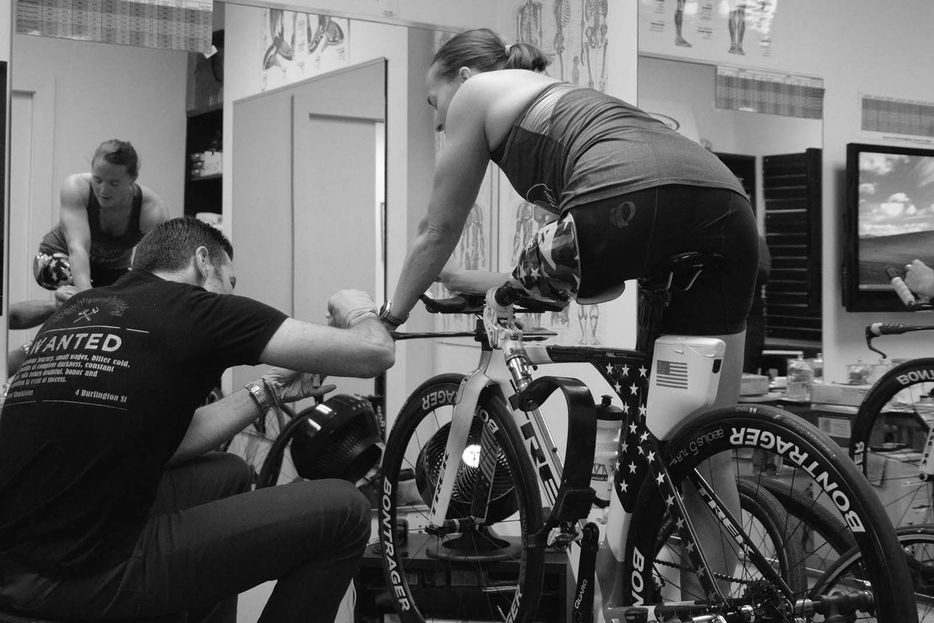
Kinotek Movement Screening analyzes how you move. It identifies asymmetries, compensation patterns, and mobility restrictions that most athletes never know they have until they get injured. For cyclists specifically, it helps us understand how your body mechanics on the bike are affecting your power output and injury risk.
Resting Metabolic Rate (RMR) Testing tells us exactly how many calories your body burns at rest. This matters because most caloric targets used in popular diet programs are estimates based on population averages. Your number may be meaningfully different, and that difference explains a lot about why generic nutrition guidance works for some people and fails others.
Sweat Testing analyzes your sodium concentration, which is the critical variable for hydration strategy. Athletes who cramp, hit a wall late in a race, or deal with persistent fatigue during long efforts often have a sodium replacement problem, not a fitness problem. This test identifies that so it can be fixed.
Not every athlete needs every test. Part of what we do in the initial consultation is understand your goals well enough to recommend the right combination.
Why the Coaching Behind the Data Matters
Data without interpretation is noise. You can take a VO2 Max test at any number of performance labs in the Chicago or Highland Park area and walk out with a number. What you cannot walk out with is 25 years of experience applying that number to actual training prescriptions for actual athletes.
Robbie Ventura founded Vision Quest in 2000 after competing as a professional cyclist on the U.S. Postal Service team alongside Lance Armstrong. The methodology he built here was not adapted from a corporate fitness franchise. It was developed from the same approach used to prepare professional cyclists for the Tour de France, and refined over a quarter century of working with athletes at every level.
That background matters because interpretation is a skill. Understanding that a certain VO2 Max result at a certain age with a certain training history calls for a specific zone distribution is not something a chart gives you. It comes from coaching thousands of athletes and seeing what actually produces results.
When your testing is complete, you sit down with a coach who understands the numbers, knows how to translate them into a training plan, and can adjust that plan as your fitness evolves.
What Happens After the Consultation
A consultation at Vision Quest is the starting point, not the whole program. Once your baseline data is established, you move into training with the full support of our coaching team.
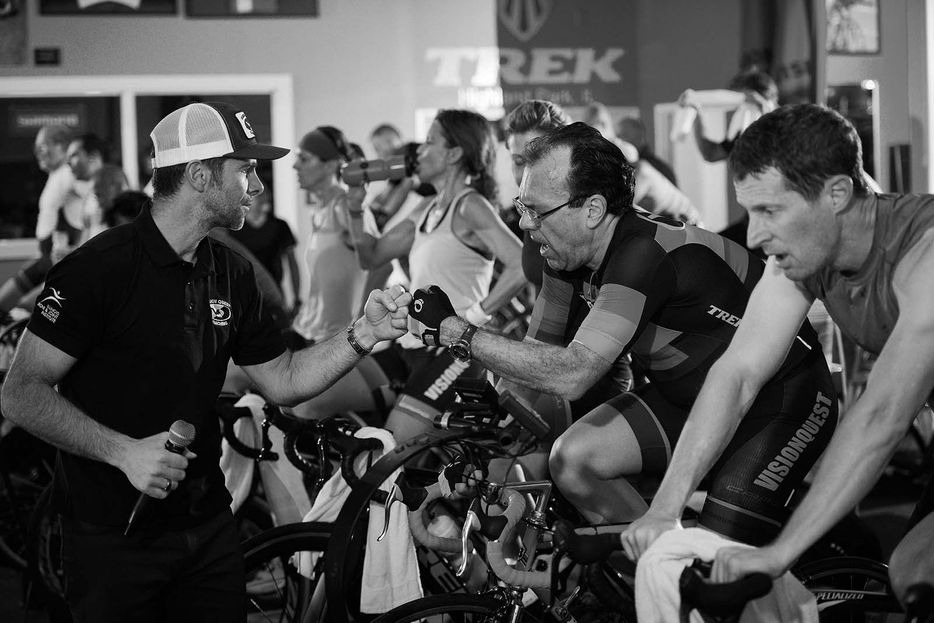
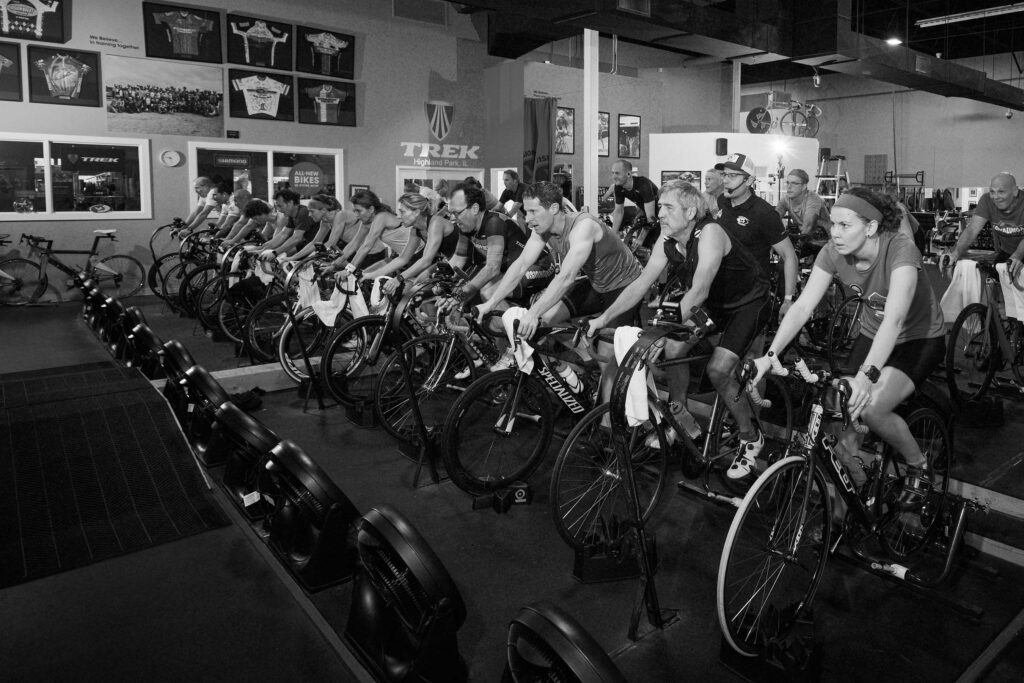
For most athletes in Highland Park, that means joining the in-studio cycling program where your personalized power zones are displayed on the coach board during class. When your coach calls out a watt target, it is your watt target, calibrated to your specific fitness data, not a generic number designed for a room full of different athletes. We offer 15 or more coached cycling classes per week at Highland Park, covering intensity work, endurance development, and tempo training.
For athletes whose goals include strength and injury prevention, we have our small-group strength training program at Highland Park. Every new member starts with a movement screen so we know exactly what to address before we add load.
Athletes who want to extend their training beyond the studio or work with a coach on race planning and periodization can explore our virtual coaching options, which apply the same data-driven methodology remotely.
We retest around 6 months or as needed. The numbers you started with become a baseline. Your new numbers become the proof that the training is working, and the foundation for the next training block.
Red Flags in a Fitness Consultation
If you are evaluating fitness coaches or performance programs in the Highland Park area, a few things should give you pause.
A consultation that skips testing entirely is not a precision program. It is a template. Any coach can hand you a plan based on your goals. A performance coach gives you a plan based on your physiology. The difference shows up in your results, usually within the first 8 to 12 weeks.
A program that does not retest you is not tracking your progress objectively. Retesting is how you know whether the plan is working or whether it needs to change. Without it, you are relying on subjective perception, which is easy to rationalize in either direction.
A facility that sells you on effort rather than outcomes is prioritizing your experience over your results. There is nothing wrong with enjoying training. But if the program cannot tell you what you have gained since you started, it is not a coaching program. It is a fitness service.
Inside a Session at Vision Quest Coaching Highland Park
When you walk into the Highland Park studio at 1923 Skokie Valley Rd, the first thing you notice is that this is not a boutique fitness environment built around aesthetics and atmosphere. It is a performance facility. The screens in the cycling studio display live data. The coaches are watching your output, not just counting reps.
Athletes range from competitive triathletes building their preseason base to cyclists training for their first century ride to weight loss clients who want a structured, coached environment rather than an open gym floor. What they have in common is that they all train with a plan built around their specific data, and they all retest to confirm it is working.
The community here is real in a way that is hard to describe until you experience it. Athletes who have been training at Vision Quest for years show up for each other on hard days. That is not something you manufacture. It develops when the coaching is good enough that people stay, and when the training is challenging enough that surviving it together means something.
Frequently Asked Questions
How is a fitness consultation at Vision Quest different from a standard gym intake?
A standard gym intake collects your goals and health history. Our consultation collects your physiological data. We use VO2 Max testing, DEXA scanning, Kinotek movement screening, and RMR measurement to build a program based on how your body actually works, not how the average body works.
Do I need to be a competitive athlete to benefit from performance testing?
No. Many of our athletes are not competitive. They are working adults who want to train with precision and see real results. The data-driven approach works regardless of your fitness level because it is calibrated to your physiology, not a performance standard.
What is VO2 Max and why does it matter?
VO2 Max measures your aerobic capacity, which is how efficiently your body delivers and uses oxygen during exercise. It is one of the strongest predictors of cardiovascular health and long-term longevity. For training purposes, it tells us your exact zones so you are working at the right intensity in every session.
Are the testing services available at both the Highland Park and Chicago locations? DEXA scanning, VO2 Max testing, Kinotek assessment, and RMR testing are available exclusively at our Highland Park location. Sweat testing is available at both Highland Park and Chicago.
What happens between my initial consultation and my first retest?
You train with a program built around your baseline data. Your power zones are loaded into the coaching system so your targets are personalized in every class. We track progress and adjust the program as needed. At the 12 to 16 week mark, you retest so we can measure exactly what has changed.
How do I get started?
Your first class is free. Book directly online, come in, and experience the coaching. If you want to start with testing first, we can schedule a consultation and walk you through which assessments make sense for your goals.
Take the First Step Toward Smarter Training
If you are ready to stop guessing and start training with purpose, schedule a fitness consultation in Highland Park with Vision Quest Coaching. We will review your goals, assess your current fitness, and outline clear, data-driven next steps tailored to you. To find a time that fits your schedule or ask questions before you get started, simply contact us today.