Fitness Testing in Highland Park: Stop Guessing and Start Training With Real Data
Fitness testing in Highland Park at Vision Quest Coaching measures your exact cardiovascular capacity, body composition, metabolic rate, and movement quality. This is so that every training decision you make from that point forward is guided by your actual physiology, not an estimate. If you have been training consistently but your pace, power, or body composition has stopped moving, this is almost always a feedback problem rather than an effort problem. You are training hard. You are just not training with the right information. That is exactly what performance testing fixes.
We have been testing athletes at our Highland Park studio since 2000. We have completed more than 8,000 individual athlete assessments across cycling, triathlon, running, and general fitness. The data we have accumulated over 25 years tells us one thing with certainty that athletes who train with tested, accurate baselines progress faster, plateau less often, and stay healthier longer than athletes who train on without data.
What Is Fitness Testing and Why Does It Matter?
Fitness testing is the process of measuring the specific physiological variables that determine how your body responds to training. Rather than estimating your fitness from age-based formulas or wearable device algorithms, both of which may carry significant individual error, direct testing measures what is actually happening in your body during exercise and at rest.
At Vision Quest Coaching in Highland Park, our testing suite covers four distinct areas of performance. Each one answers a different question about your body and your training.
VO2 Max Testing measures your maximum oxygen uptake — the ceiling of your cardiovascular system’s ability to deliver and use oxygen during intense effort. This is the single most predictive measure of endurance performance capacity. Knowing your VO2 Max tells us which energy systems are developed and which are undertrained, and it sets the foundation for accurate training zone calculation. Our members who complete structured training after VO2 Max testing improve their scores by an average of 14 percent in seven months.
DEXA Body Composition Scanning uses dual-energy X-ray absorptiometry to measure your lean muscle mass, body fat percentage, and bone density with a precision that no scale, caliper, or bioelectrical impedance device can approach. This data is critical for weight management, performance optimization, and tracking whether your training is building muscle or losing it. Our members reduce body fat by an average of 12 percent in six months when training is guided by DEXA data.
Resting Metabolic Rate Testing uses indirect calorimetry to measure exactly how many calories your body burns at rest. This number is the foundation of every nutrition decision — how much to eat on training days, rest days, and race days. Most online calculators are off by 20 to 30 percent for individual users. A tested RMR eliminates that error entirely.
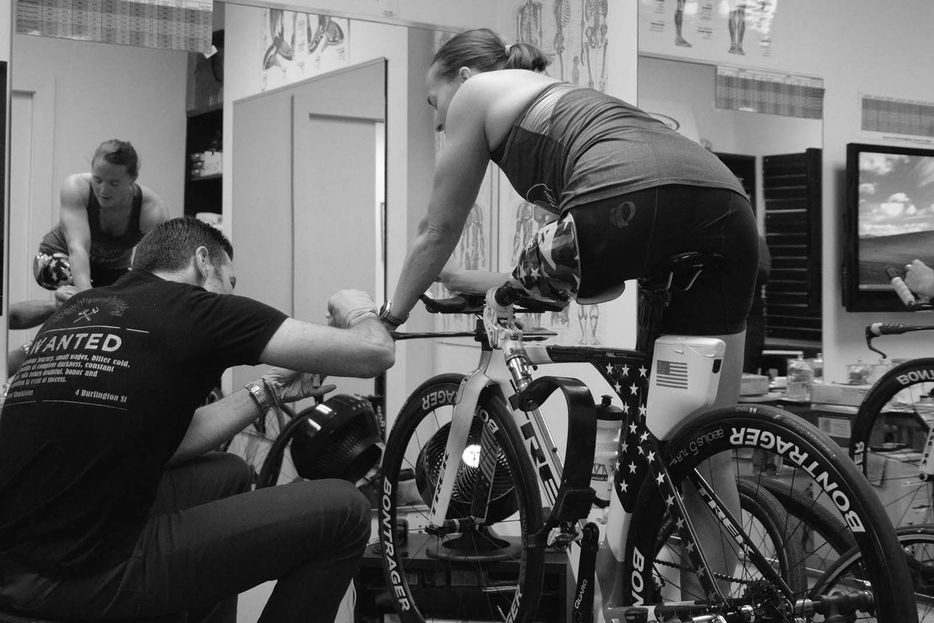
Kinotek Movement Screening uses video-based motion analysis to identify biomechanical inefficiencies and muscular imbalances in your movement patterns. For cyclists, triathletes, and runners, these imbalances are often the hidden cause of chronic injury, unexplained fatigue, and power loss that no amount of additional training addresses.
Sweat Testing analyzes your individual electrolyte loss rate during exercise, allowing us to build a precise hydration and fueling strategy specific to your body chemistry rather than a generic sports drink recommendation.
Together these tests give us and you a complete picture of your current fitness baseline.
How to Recognize a Real Fitness Plateau
A genuine plateau is distinct from a couple of difficult training weeks. It is a sustained period, typically four weeks or more, of consistent training effort that produces no measurable improvement in performance, body composition, or recovery quality.
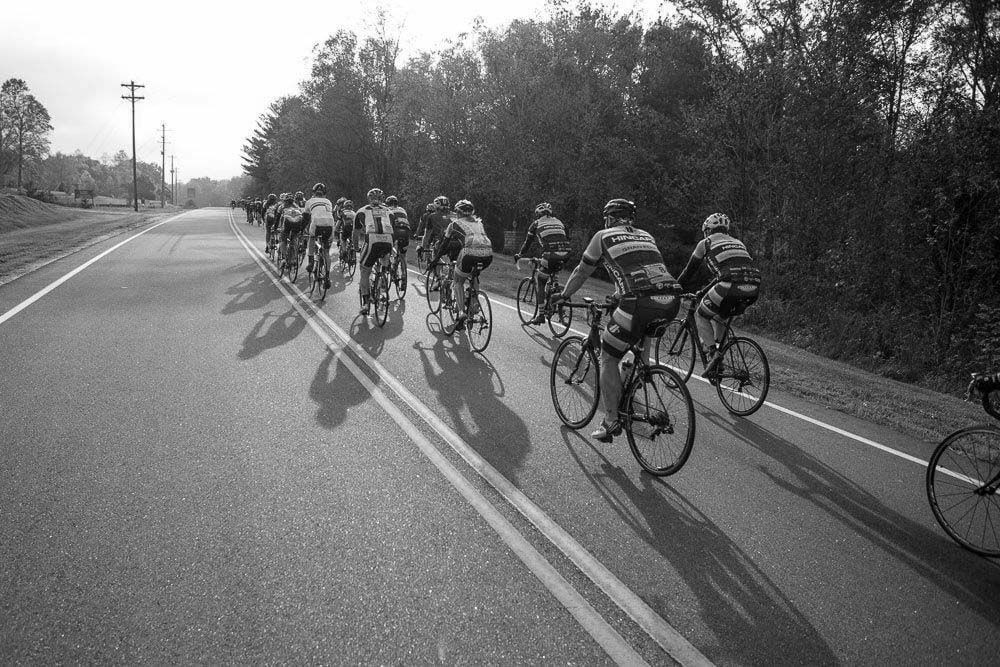
The clearest signs that you are in a real plateau include working harder than usual to hit the same power outputs or running paces you maintained easily six weeks ago, recovery between intervals taking noticeably longer than it did earlier in your training cycle, heart rate running abnormally high or low for familiar workloads, and performance dropping on routes around Highland Park or the North Shore that you know well and have benchmarked against previously.
What most athletes do when they recognize a plateau is add more — more miles, more intensity, more classes. This almost always makes the situation worse. The body needs adequate recovery stimulus to absorb training adaptation. When that balance is disrupted, typically through accumulated fatigue from months of medium-hard effort without sufficient easy recovery, you begin to see nagging aches that do not resolve, sleep quality declining despite physical tiredness, and motivation swinging unpredictably from session to session.
This is a feedback problem rather than a willpower problem. Your training is not calibrated to what your body currently needs because you do not have accurate data about what that is. Performance testing solves this problem directly by replacing guesswork with measurement.
How Fitness Testing in Highland Park Breaks Through Plateaus
Fitness testing gives you a clear snapshot of your current engine. At our Highland Park studio, testing feels like a coaching session rather than a clinical exam, with a coach present the entire time explaining what is happening and why. For athletes who cannot always make it in person, results review and ongoing coaching support are also available through our virtual-coaching.
One of the most valuable tests we offer is our metabolic assessment because it provides information that can truly change both performance and long-term health. VO2 Max is one of the single best predictors of both lifespan and healthspan. Research consistently shows that people with higher VO2 Max values tend to live longer, healthier, and more active lives. Improving your aerobic fitness is not just about performing better. It is an investment in your future health and independence. Most people think about fitness testing in the context of race performance or hitting a power number. But for the everyday adults and masters athletes we work with at Vision Quest Coaching, the long-term health implications of improving VO2 Max are often the more meaningful outcome. Our members improve VO2 Max by an average of 14 percent in seven months of structured, data-driven training.
Beyond the longevity benefits, the metabolic assessment identifies your exact heart rate for optimal fat burning, your true Zone 2 heart rate and pace per mile or cycling power, and the precise training intensities that will produce the greatest improvements for your specific physiology.
For cyclists specifically, our metabolic assessment also includes lactate testing, which allows us to identify exactly which energy systems need the most attention. We can determine what is currently limiting your performance, the specific outputs including heart rate, power, and pace you need to train at, and whether you need to focus on aerobic development, threshold work, or high-end fitness. Too many athletes train hard without knowing if they are training the right system. Defining what is holding you back is the key to making sure every hard workout has a purpose and delivers the adaptation you actually need.
This is the core problem with training in a plateau. When your zones are based on estimates rather than tested data, you often end up in what coaches call no-man’s-land: always kind of hard, never truly easy, and not hard enough to drive meaningful adaptation in the specific energy system that is actually limiting your performance. The metabolic assessment removes that ambiguity entirely.
Beyond metabolic testing, our full testing suite at Highland Park also includes DEXA body composition scanning, Resting Metabolic Rate measurement, Kinotek movement screening, and sweat testing. Together these give us a complete picture of where you are right now and exactly what your training needs to target to move you forward. When we turn your test results into a training plan, we turn them into instructions that fit the actual routes and races you are preparing for.
When It Is the Right Time to Book a Fitness Test
You do not need to be in a plateau to benefit from fitness testing. In fact, the most effective use of testing is proactive, establishing baselines before problems develop rather than diagnosing them after the fact.
The best times to schedule fitness testing in Highland Park are at the start of a new training cycle when you want accurate zones from day one rather than spending weeks training to estimated targets, mid-season when early fitness gains have leveled off and your current zones may no longer reflect your improved capacity, before a major target event when you want to build a race-specific plan on current rather than outdated data, and after returning from injury or illness when your previous baseline is no longer reliable and training to old numbers carries injury risk.
For most athletes, retesting every 6 months keeps training zones accurate as fitness evolves. This rhythm catches plateaus before they become entrenched and ensures the plan your coach is building reflects who you are today rather than who you were four months ago.
If you have never completed performance testing before, the process is straightforward and not intimidating. Every test at Vision Quest Coaching is explained step by step before it begins. Tests are scaled to your current fitness level. The goal is not to pass or fail, it is to learn. A good test session feels more like a structured workout with a coach present than a clinical examination.
Turning Your Test Results Into a Smarter Training Plan
Raw numbers are only valuable when they are translated into specific, actionable training decisions. At Vision Quest Coaching, the testing session is the beginning of a coaching conversation rather than a standalone data delivery.
Once your results are in, your coach uses them to build a training roadmap that connects directly to your goals. If you are preparing for a triathlon or cycling event, your zones, fueling strategy, and race-day pacing plan are all built from your tested data. If your goal is weight loss or body composition change, your DEXA results and RMR measurement combine to build a nutrition and training framework that protects lean muscle while driving fat loss. If you are a general fitness member who simply wants to feel stronger and more energetic, your movement screening and metabolic data shape a program that addresses your specific weak links rather than applying a generic template.
Follow-up support through in-studio coaching, virtual training, and small-group sessions keeps the plan progressing as your fitness changes. As you retest at regular intervals, your coach updates your zones and adjusts your program structure so the training you are doing at month six is as precisely calibrated as the training you did at month one.
The broader benefits extend beyond performance metrics. Athletes who train with accurate data consistently report more stable energy through the working day, fewer recurring injuries, and significantly greater confidence in their training because every session has a clear purpose and a defined expected outcome rather than a vague hope that the accumulated work will eventually show up in the numbers.
Break Through Your Plateau With Fitness Testing in Highland Park
If your effort is high and your results have stalled, the answer is not more training. The answer is better information. Fitness testing at Vision Quest Coaching in Highland Park gives you clear, objective feedback on where you are strong, where you are limited, and how to train in a way your body can actually respond to.
We have tested more than 8,000 athletes over 25 years. We know what the data shows, we know how to explain it clearly, and we know how to turn it into a training plan that produces results you can measure. We bring together data, coaching, and local knowledge of Highland Park and the greater Chicago area to help you turn that mid-season stall into a turning point. With the right testing and guidance, a plateau is not the end of progress; it is the moment you stop guessing and start training with purpose.
Schedule a session with our coaching team or contact us with questions so we can help you take the next step toward your goals.