Here’s something that might surprise you.
If you’re riding fewer hours this winter, you may actually be able to handle a greater percentage of high-intensity training.
Winter cycling training doesn’t have to mean sacrificing fitness. In fact, if your available riding time drops during the colder months, you may have an opportunity to make your workouts more focused and productive.
Sounds strange, right?
But let me explain.
During the summer, many of our VQ athletes are riding eight, ten, or even twelve hours a week.
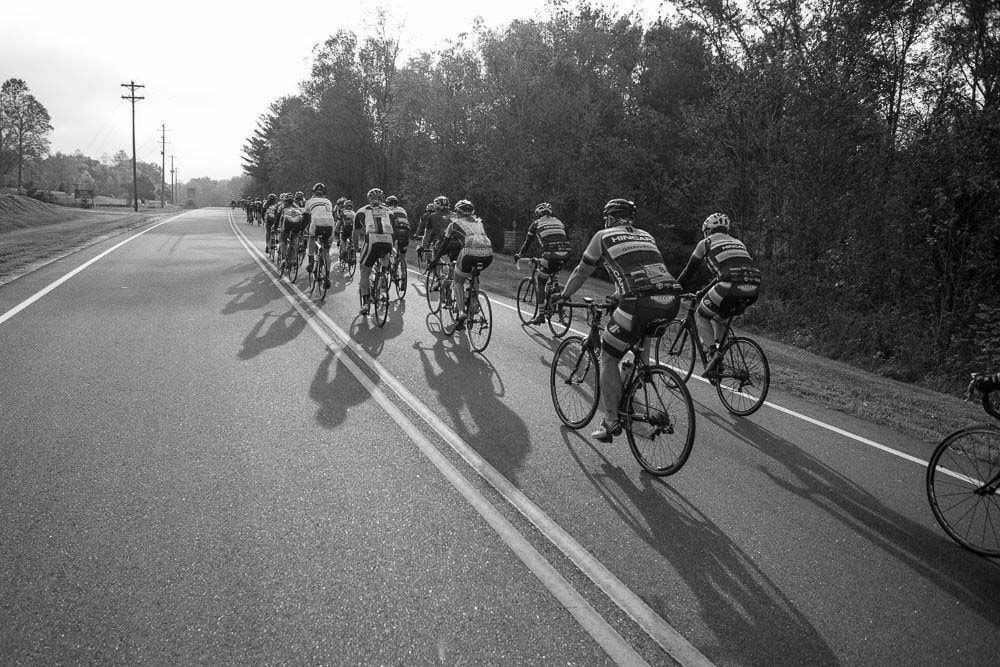
They’re doing long outdoor rides, group rides, intervals, and sometimes racing.
That’s a lot of training stress!
When you’re riding that much, you have to be careful about how much high-intensity work you add. The combination of volume and intensity can wear you down pretty quickly.
But what happens when winter arrives and your training drops from ten hours a week to four?
Your total training load often drops significantly.
And that creates an opportunity.
Winter Cycling Training: Less Volume, More Room for Intensity
Let’s compare two training weeks.
Summer: 10 hours per week
You might do one or two hard workouts, several longer Zone 2 rides, and a little recovery riding.
The majority of your time is spent building and maintaining aerobic endurance.
Winter: 4 hours per week
You may be able to handle two quality interval sessions and, for some well-conditioned athletes, even a third session with a smaller dose of intensity.
Why?
Because you’re no longer carrying the fatigue from all those additional training hours.
But there’s an important distinction.
More intensity as a percentage of your training doesn’t necessarily mean more total intensity.
And it certainly doesn’t mean you should turn every ride into a race!
Your ability to handle hard work still depends on your fitness, recovery, sleep, stress, and how accustomed you are to interval training.
The key is finding the right dose.
Why Indoor Cycling Workouts Are So Effective
This is where indoor training really shines.
When you’re training outdoors, it can be difficult to execute a perfectly structured workout.
There are stoplights, hills, traffic, wind, and other riders.
Indoors, we can control the workload much more precisely.
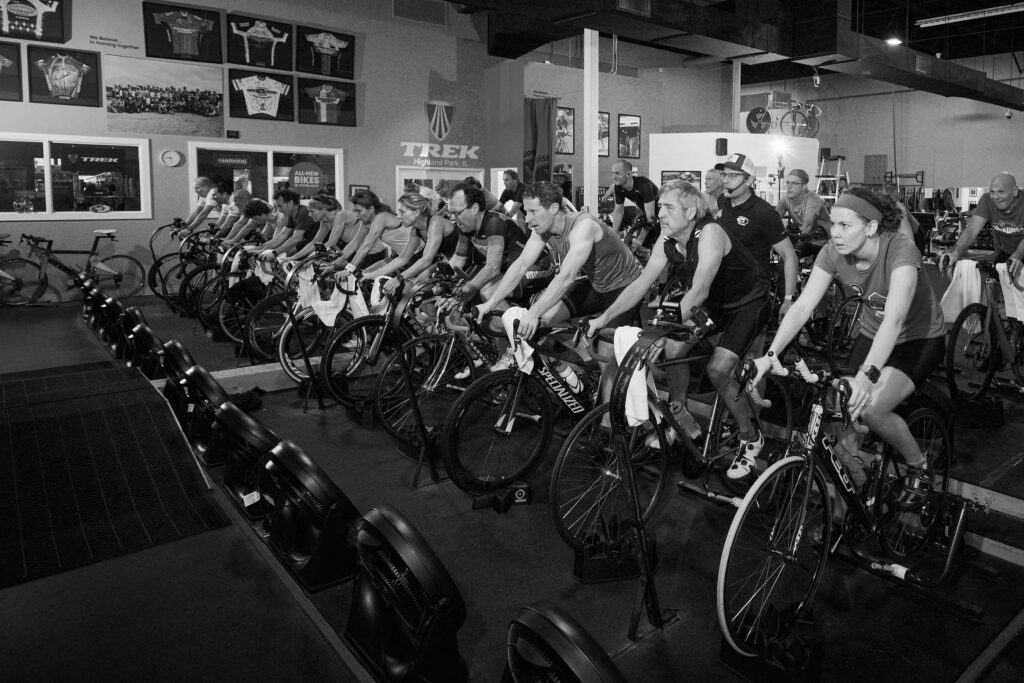
At VQ, our software allows us to prescribe specific intensities and durations, whether you’re riding in our studio or joining us virtually.
We can target VO2 max, threshold, steady-state power, or aerobic endurance with incredible precision.
And we can do it while making the experience engaging.
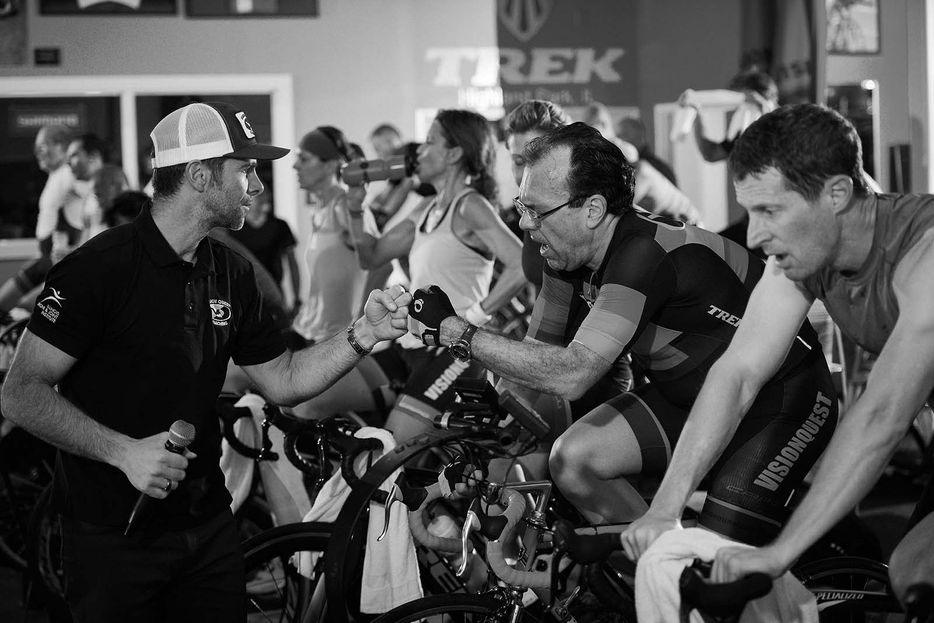
Our software allows us to teach valuable cycling skills, use courses and interactive features, gamify the experience, and help athletes understand why they’re doing the work.
It’s not just about staring at watts on a screen.
It’s about getting better while enjoying the process.
A Four-Hour Winter Cycling Training Plan
Let’s say you only have four hours a week to train this winter.
Here’s one example of how you might structure those hours:
| Day | Workout | Duration |
|---|---|---|
| Tuesday | VO2 max intervals | 60 min |
| Thursday | Threshold or steady-state intervals | 60 min |
| Saturday | Zone 2 with a few short controlled efforts, if appropriate | 60 min |
| Sunday | Steady Zone 2 endurance | 60 min |
That’s four hours of very purposeful training.
You’re touching multiple energy systems, developing your aerobic fitness, and keeping enough recovery between your harder sessions.
For some athletes, two hard sessions will be plenty. Others may benefit from a third, smaller dose of intensity, but only if they’re recovering well.
And remember, strength training counts toward your overall workload too!
Balancing Intensity and Endurance
There’s one important limitation to this approach.
Four hours of training, even with more intensity, doesn’t replace all the benefits of ten hours of aerobic work.
If you’re preparing for a long gravel race, a century ride, or a major cycling camp, you’ll eventually need the endurance that comes from longer rides.
But during a winter period when your available time is limited, you can still make meaningful improvements.
You just need to be smart about how you use those hours.
This Is What VQ Does Best
At VisionQuest, we don’t believe everyone needs the same workout.
Some athletes need more VO2 max work. Others need threshold development. Some need more Zone 2. And some simply need to train consistently without overdoing it.
Our job is to help you figure out which one you are.
That’s why I’m such a big believer in metabolic testing, understanding your rate-limiting factor, and creating a Perfect Week that fits your life.
We can use the VQ studio, VQ Virtual, our coaching, and our technology to deliver the right workout at the right time.
You don’t need unlimited hours to become a better cyclist. You need to make the hours you have count.
So if your training time drops this winter, don’t get discouraged.
Use it as an opportunity to be more focused, more intentional, and more efficient.
Train with purpose. Recover with purpose. And come out of winter ready to ride!
SIGN UP FOR YOUR NEXT INDOOR RIDE
Resources:
Training Periodization, Intensity Distribution, and Volume in Trained Cyclists: A Systematic Review
What is best practice for training intensity and duration distribution in endurance athletes?