DEXA Scan in Highland Park: The Most Accurate Way to Track Real Body Change
If you have been training consistently and the scale is not telling you the full story, a DEXA scan in Highland Park at Vision Quest Coaching will. A DEXA scan measures exactly how much of your body is lean muscle, fat tissue, and bone with a precision that no scale, tape measure, or body fat calculator can come close to matching. We have used DEXA scanning as part of our performance testing suite for years, and it consistently changes how our members understand their bodies and structure their training.
We have tested more than 8,000 athletes at our Highland Park studio over 25 years. What we see repeatedly is that the people who make the most consistent progress are the ones who stop guessing and start measuring. DEXA scanning is one of the clearest ways to do that.
Why the Scale Is Lying to You
Most people use the scale as their primary measure of progress. The problem is that body weight is a terrible indicator of what is actually happening inside your body during a real training program.
Here is a common scenario. You train hard for eight weeks. You ride more, lift more, clean up your nutrition. The scale moves two pounds. Frustrating, right? Except when you look at a DEXA scan from the start and end of those eight weeks, you might find you lost six pounds of fat and gained four pounds of lean muscle. That is a genuinely significant body composition change that the scale completely obscured.
BMI has the same problem. It uses only your height and weight, which means a lean, muscular athlete and a sedentary person of the same height and weight get the same BMI score. It tells you nothing about where fat is stored, how much muscle you actually carry, or whether your bones are holding up under your training load.
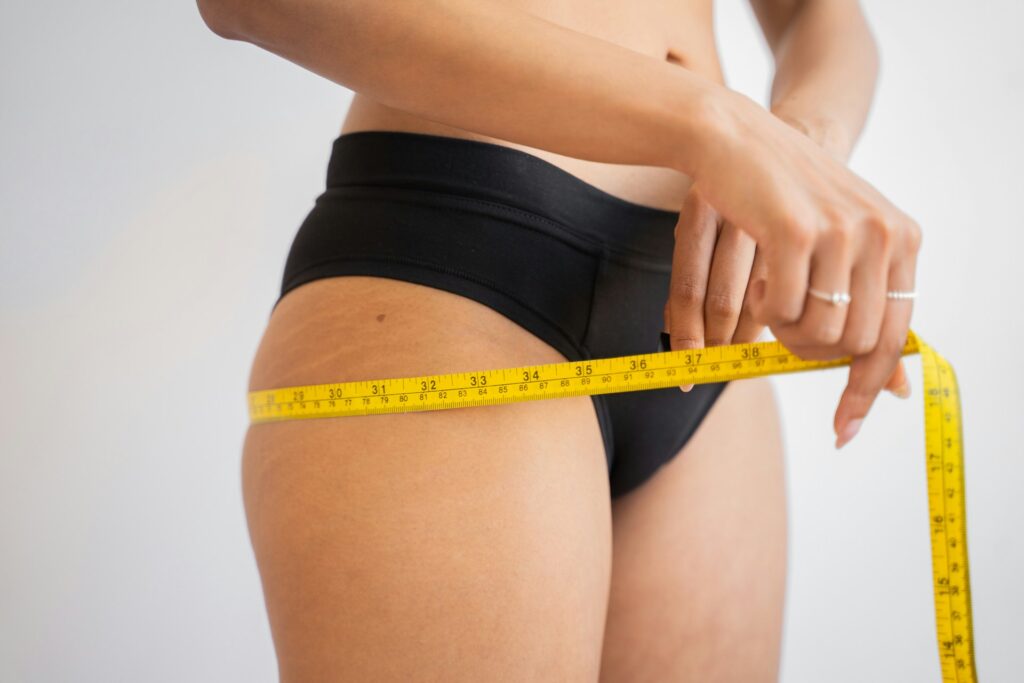
Tape measurements are better than BMI but still limited. They vary depending on where exactly you place the tape, they shift with daily water retention and bloating, and they give you no regional detail about where changes are actually happening.
Our members reduce body fat by an average of 12 percent in six months when their training and nutrition are guided by real data. That kind of result does not come from stepping on a scale every morning. It comes from knowing your actual numbers and training toward them.
How a DEXA Scan Actually Works
The process is simpler than most people expect. You lie on a padded table, stay still, and a scanner passes over your body. The whole thing takes about 10 minutes. There are no tight spaces, no loud noises, and nothing uncomfortable about it.
The scanner sends a very low dose X-ray through your body and measures how it passes through different tissue types. Fat, muscle, and bone all respond differently, which allows the machine to map your body composition in precise regional detail.
What you get from a single scan includes your total body fat percentage, a breakdown of fat storage by region including arms, legs, and trunk, lean muscle mass in each area of your body, visceral fat levels around your midsection and organs, and bone density readings across key skeletal areas.
The regional detail is where DEXA becomes especially useful for athletes. You can see whether one leg carries significantly more muscle than the other, whether your upper body is lagging behind your lower body in lean mass, and where you are storing the most fat relative to your overall composition. These are the kinds of imbalances that affect power on the bike, pace on the run, and injury risk over a long training season.
The radiation dose from a DEXA scan is extremely low, lower than a standard chest X-ray and roughly equivalent to a few hours of normal background radiation. It is safe, non-invasive, and repeatable on a regular schedule without any health concern.
Why Getting a DEXA Scan in Highland Park Specifically Matters
There are places in Chicago where you can get a DEXA scan done quickly and cheaply. What you will not get at most of those places is a coach who knows how to connect your body composition data to your actual training program.
At Vision Quest Coaching, your DEXA results do not sit in a PDF you take home and try to interpret on your own. Your coach walks through every number with you, explains what it means for your specific goals, and connects it directly to your cycling training, strength work, or general fitness program. That connection between data and coaching is what turns a scan into a genuine training tool rather than an interesting data point you look at once and forget.
For athletes in Highland Park and the North Shore area training for events like Supertri Chicago, local Gran Fondos, or spring and summer triathlons, body composition has a direct performance implication. Carrying less non-functional fat at the same or higher power output makes you faster on every climb and more efficient across every mile. Knowing your current numbers and having a coach build a plan around them is a meaningful competitive advantage.
Robbie Ventura, founder of Vision Quest Coaching and former professional cyclist, puts it simply: “These tests remove the guesswork and provide a clear roadmap to help you live longer, stay healthier, and perform at your highest level.”
What Your DEXA Results Actually Tell You
A lot of people come in expecting a simple fat percentage number. What they get is significantly more detailed than that, and understanding each component makes the data actionable rather than just interesting.
Your total body fat percentage is the headline number, but the regional breakdown is often more revealing. Where you store fat matters for both health and performance. Visceral fat, the fat stored around your organs in your midsection, carries different health implications than subcutaneous fat stored under your skin. Seeing your visceral fat level and tracking it over time is one of the most meaningful health markers available from a DEXA scan.
Lean muscle mass by region shows you exactly where you are strong and where you are underdeveloped. For cyclists this often reveals significant asymmetry between dominant and non-dominant legs, which can contribute to knee tracking issues, hip imbalances, and chronic soreness that never fully resolves no matter how much stretching you do.
Bone density is the component most athletes overlook entirely. Cyclists are at higher risk of lower bone density than many other active adults because cycling is a non-impact sport that does not load the skeleton the way weight-bearing activities do. That makes bone density monitoring particularly important for anyone whose primary training is on the bike. Tracking bone density over time, especially as training volume increases, is important for long-term health and injury prevention.
How We Turn Your DEXA Data Into a Training Plan
Getting the scan is step one. What happens next is where Vision Quest Coaching earns its reputation.
Once we have your results, your coach uses them to build or adjust your training plan with specific targets in mind. If your scan shows a lean mass deficit in your upper body, we adjust your strength programming to address it. If visceral fat is elevated, your cycling training and nutrition approach gets structured specifically around reducing it. If bone density is lower than expected, your training load and recovery schedule get adjusted accordingly.
On the nutrition side, knowing your exact lean mass and fat mass allows us to set calorie and macronutrient targets that are genuinely specific to your body rather than based on population averages. The difference between eating to support muscle growth, eating to drive fat loss while preserving muscle, and eating for body recomposition is not just a matter of eating more or less. It is a matter of knowing your actual numbers and building a plan around them.
Your DEXA scan can also be combined in the same visit with VO2 Max testing, Resting Metabolic Rate measurement, and Kinotek movement screening to build a complete performance baseline in a single session. Many of our members complete the full testing suite at the start of a new training block and use all of it together to build a genuinely comprehensive plan.
The most useful thing about repeat DEXA scanning is the trend data. A single scan gives you a baseline. A scan three or four months later shows you whether your training and nutrition approach is actually working the way you intended. You stop reacting to the scale and start tracking real change in the numbers that actually matter.
What to Expect on the Day of Your Scan
When you come in for your DEXA scan at Vision Quest Coaching in Highland Park, the process is relaxed and straightforward. We do a quick intake covering your current training, recent nutrition, and specific goals, then walk you to the scan room.
A few simple steps help keep your results consistent across multiple scans. Wear light clothing without metal zippers or underwire. Try to book future scans at a similar time of day. Avoid a large meal or intense training session immediately beforehand. Keep your hydration level roughly consistent from scan to scan.
After the scan your coach sits with you and walks through everything you are seeing. Total body fat percentage, lean mass by region, visceral fat level, bone density readings. We explain what stands out, what looks strong, and what your numbers suggest about where your training focus should go next. You leave with a clear understanding of where you are right now and a specific plan for where you are going.
Frequently Asked Questions About DEXA Scans in Highland Park
What does a DEXA scan measure at Vision Quest Coaching in Highland Park?
A DEXA scan at Vision Quest Coaching measures your total body fat percentage, lean muscle mass broken down by region, visceral fat levels around your midsection, and bone density across key skeletal areas. Results are reviewed with a coach immediately after your scan and connected directly to your training and nutrition plan.
How is a DEXA scan different from a body fat scale or BMI calculation?
Body fat scales use bioelectrical impedance which is highly sensitive to hydration levels and can vary significantly from day to day. BMI uses only height and weight with no distinction between muscle and fat. A DEXA scan uses low-dose X-ray technology to directly measure each tissue type with a level of precision and regional detail that neither of those methods can approach.
Do I need to be an athlete to get a DEXA scan in Highland Park?
No. Vision Quest Coaching works with competitive athletes and everyday adults alike. DEXA scanning is useful for anyone who wants an accurate picture of their body composition, whether the goal is weight loss, muscle building, performance improvement, or simply understanding their baseline health markers.
How often should I get a DEXA scan at Vision Quest Coaching?
Most members retest every 6 months. This frequency gives enough time for meaningful body composition changes to occur while keeping your training plan updated with current data. Athletes preparing for a specific event may choose to scan more frequently.
Can I combine a DEXA scan with other fitness testing at Vision Quest in Highland Park?
Yes. Many members complete their DEXA scan alongside VO2 Max testing, Resting Metabolic Rate measurement, Kinotek movement screening, and sweat testing in a single visit. Your coach combines all results into one unified training and nutrition roadmap.
How accurate is DEXA scanning compared to other body composition methods?
DEXA scanning is considered the gold standard for body composition measurement in both clinical and sports science settings. It is significantly more accurate than skinfold calipers, bioelectrical impedance scales, and circumference measurements, and it provides regional detail that none of those methods offer.
Ready to Find Out What Your Body Is Actually Made Of?
Your DEXA scan in Highland Park at Vision Quest Coaching takes about 10 minutes. Your coach reviews every number with you immediately after. You leave knowing exactly where you are, what it means for your training, and what needs to change to get you where you want to go.
We have tested more than 8,000 athletes over 25 years. We know how to read these numbers and we know how to turn them into a plan that works.
If you are ready to move beyond guesswork and understand exactly what your body needs, simply contact us today.